What I’m hearing
Concerns from Ward 9
Concerns that have been brought to me appear here. If you have something to say, the form is on the homepage.
-
Matt, I have a question. If I vote for you, what will you do to keep the homeless off the street? Is your response - by-law compliance and police action? or, is it place them in care/treatment at my expense? or, other?
-
This resident says the garbage situation at the Wonderland Path townhouses is very disappointing, and suggests outdoor garbage and recycling bins like the ones at the complex across Savoy Street beside the fire hall.
-
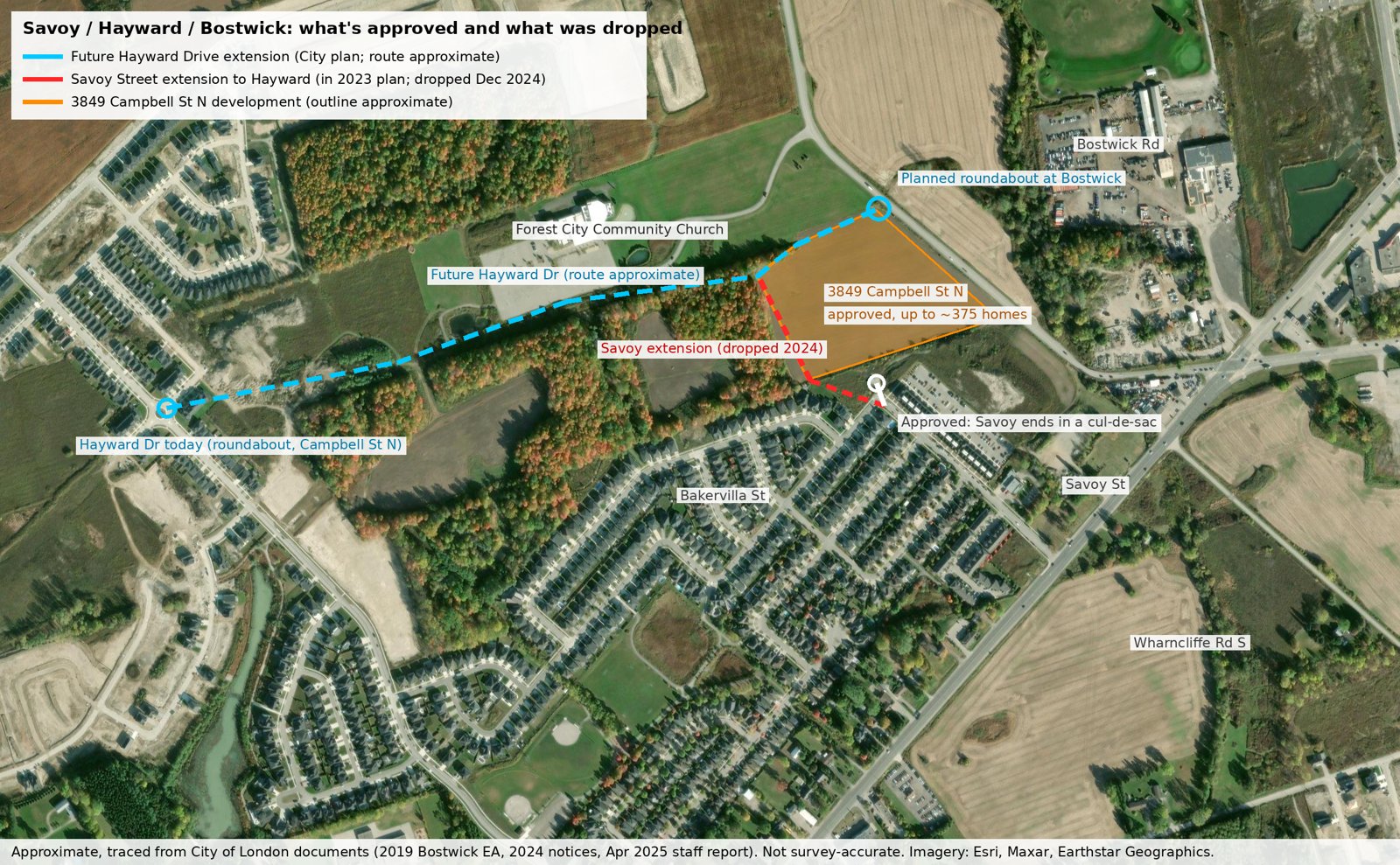
This resident lives just off Savoy Street, near the fire hall. They ask whether traffic lights will ever be installed at the Savoy Street and Wharncliffe Road intersection, which they say has become very busy, and they worry an accident is likely there if nothing is done.
-
This resident says making it easier to build more homes is one of their biggest priorities. They want young people to have a realistic opportunity to afford a home in the communities where they want to build their lives, and they would like London to allow more density in existing neighbourhoods, including in Ward 9, along with greater density near transit and local shops. They want projects that meet clear zoning requirements to proceed without lengthy individual rezoning battles. They understand the importance of listening to residents, but hope council will also represent people who would like to live in these neighbourhoods and currently cannot afford to, and they feel local opposition should not continually prevent much-needed housing from being built. They hope the next councillor will make more permissive zoning a priority, and they ask what changes I would support to make it easier to build more homes in London.
-
The area around Woodhull Road was recently brought into London’s urban growth boundary. Residents want the farmland and its agricultural use to stay protected. As a farmer, how would you support an active rural community?
-
City is too leftist and woke, that’s why in decline. You seem sensible enough to know what you’re up against. Common sense over nonsense. Local government responsibilities are only priority. I’ll vote for you.
-
E-scooter safety. Kids riding e-scooters at high speeds without helmets and not following road safety.
-
Traffic on Colonel Talbot & construction of stack and pack them that will overtake Lambeth, we are fed up with city of London employees running the show.
-
A resident asked what I’d do to improve evening and weekend transit service for the Upperpoint/Riverbend area before LTC’s planned Route 22 expansion arrives. Route 17B only runs weekday daytime hours, and her son spends about six hours of his day getting to and from a math class at Western because of it.
-
A resident asked me to eliminate the $5-per-night fee charged for overnight street parking once the free allotment runs out each winter, citing a narrow street with little spare parking or snow-storage space.
-
The 62-unit development at Boler Road and Byron Baseline was approved with only 64 parking spaces, which the resident sees as inadequate. She also questions the “family homes” framing used to describe it, drawing a comparison to what she considers similar messaging around the Colonel Talbot Road and Southdale developments, and asks who on council opposed the project and why Byron keeps getting this kind of provincially driven development that, in her view, doesn’t solve housing or traffic.
-
Saunders Secondary’s yellow bus route along Byron Baseline Road was cut after roughly 50 years of service, leaving kids to walk almost a kilometre to the one remaining stop. Several kids on sports teams or in band who don’t need the morning bus but do need one to get home after practice or rehearsal have had that need ignored.
-
Our City is in decline. The downtown core is unsafe & looks dystopian. Every boulevard in Ward 9 has weeds at least 3 feet high, every year, I call, every year they say they will send someone out, every year they don’t. We never see City grounds keeping. Theft is at an all time high in Ward 9. A friend had a $3000 camera stolen from their locked car- caught on video, found online at a house in Byron, advised the police, they said just to file insurance. They knew who had it- refused to do anything about it… we need better resources allocated to our area. If nothing happens to the thieves, we just get more of it. What would you do to address these 2 concerns?
-
I like your fiscal concerns. I’d also like to add we need to know why no one is ever at work at city hall. I’d also like to know how many people work there and what they do. They should provide “proof of performance” each year to taxpayers strating what they have done within that year to EARN our money. We especially need to limit the number of people moving into our area. The high rise going up on Commissioners just west of Boler Road is an obscenity! That corner is already too hazardous.More congestion increases risks. As for Anna Hopkins - her real world business experience is selling bird seed part time before Gina Barber used her NDP voters to get her elected and there she has sat. She claims she worked for her husbnd’s business but he HAD NO BUINESS. He worked freelancing generating orders for companies’ services. He took a deposit from me (never refunded) for work never done. I called, the company said he did not work for them. Hopkins has no fiscal business acumen.
Awaiting reply
-
Asking for a lower speed limit on Longwoods Road through Ward 9, citing safety concerns and tragic fatalities including a child.